The Science of a Better Fire
WHY OUR FIRES BURN DIFFERENTLY
More heat. Less smoke. A fire you can actually sit around. Here’s the engineering behind how we made it happen.
WHERE IT STARTED
A braai trick from Johannesburg, engineered for British gardens
" Growing up in South Africa, we used a coal tower to light the braai. A simple chimney that raised the coals above an ignition source and let oxygen flood through from below. The fire burned hotter, faster, with almost no smoke. It was just physics. When I moved to the UK and started designing Fire Maestro, I went back to that same principle. The problem was: a coal tower is functional but ugly, and I wasn’t building something ugly. So instead of a tower, I built a double walled fire pit that can breath. "
Kyle, Founder, Fire Maestro
That insight; structured airflow is the difference between a smoky, dying fire and a clean, roaring one; is the engineering foundation behind every Fire Maestro pit we make.
THE FUNDAMENTALS
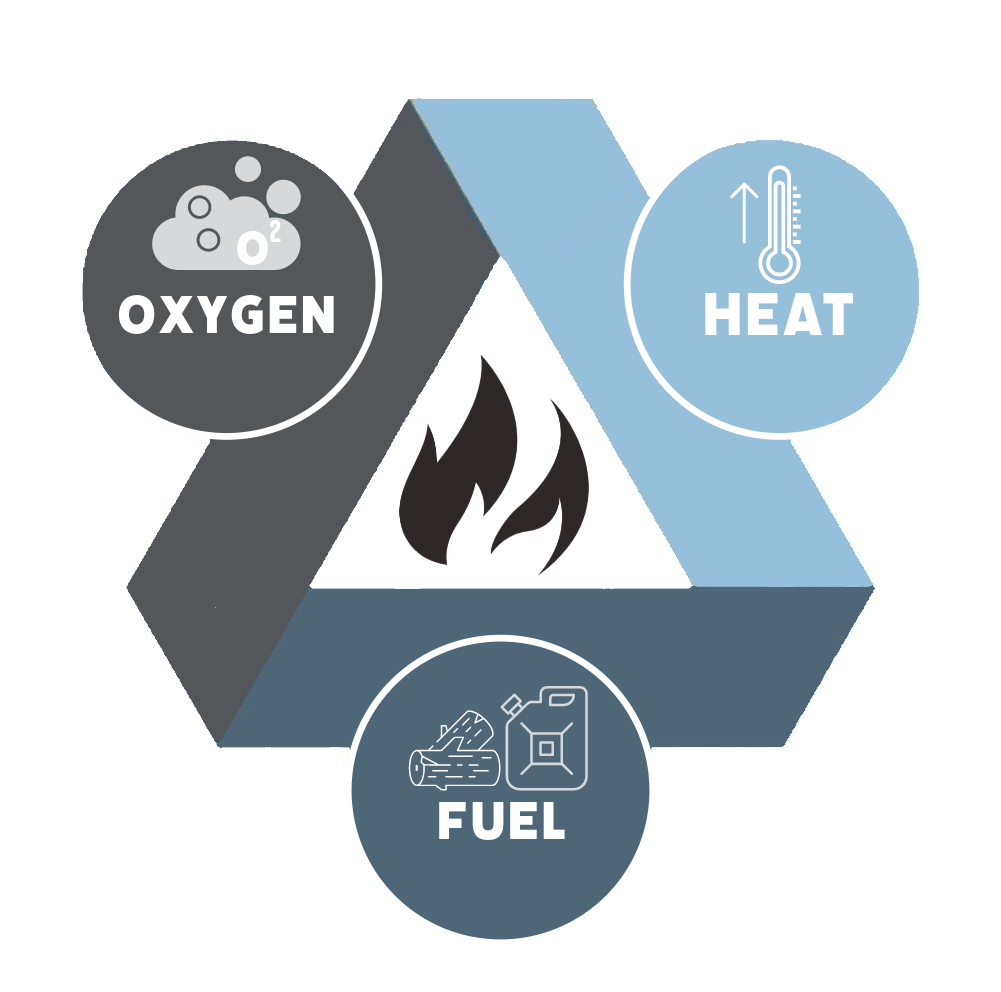
First, the fire triangle. Everything comes back to this.
Fire is simple chemistry. Three ingredients. Remove any one of them and the fire dies. Most people understand fuel and heat — but oxygen is the one most fire pits get badly wrong.
-
🔥 Heat
- The ignition point that gets combustion started. Once burning, the fire generates its own — but it needs help reaching temperature fast, especially with damp UK timber.
-
🪵 Fuel
- Wood. But not all wood is equal. Dry, seasoned hardwood burns hotter and cleaner than wet wood, which smoulders and smokes. Fuel quality matters — we’ll tell you exactly what to burn.
-
💨 Oxygen — the one most fire pits ignore
-
This is where most UK fire pits fail. Restrict airflow and you get a cooler fire, more incomplete combustion, and the smoke cloud that has half your guests doing laps around the garden. Get oxygen right, and everything changes.
-
This is where most UK fire pits fail. Restrict airflow and you get a cooler fire, more incomplete combustion, and the smoke cloud that has half your guests doing laps around the garden. Get oxygen right, and everything changes.
FOR THE NERDS
The combustion chemistry, if you want it
Smoke isn’t just an annoyance. It’s a sign of inefficient combustion; unburned carbon particles, volatile organic compounds, and partially oxidised gases that escaped the fire before completing their chemical reaction. In a standard fire pit, these rise straight out and into your eyes, your clothes, and your neighbors' gardens.
Incomplete combustion
When wood burns without enough oxygen, you get carbon monoxide (CO) and particulate matter, the visible smoke. The fire isn’t finishing the job. It’s releasing potential heat as pollution instead of burning it cleanly.
Secondary combustion
Our reburn holes inject hot, oxygen-rich air into the smoke stream. This creates a second combustion event; smoke particles reignite and burn off. What exits the pit is mostly water vapour and CO₂. More heat returned to the fire.
Temperature matters
Secondary combustion only works above around 600°C. That’s why the air must be preheated through the double wall; cold air would quench the fire rather than supercharge it. No mechanical parts required.
The braai principle
The coal tower works on exactly the same first principle: structured airflow produces a hotter, cleaner burn. Fire Maestro uses that principle, refined and built into corten and stainless steel.
The Fire Triangle
The fire triangle is a model used to explain the three elements required for a fire to ignite and continue burning: fuel, heat, and oxygen.
It's called the fire triangle because all three elements need to be present, just like the three sides to a triangle; removing any one side, will collapse the triangle, and the fire will die out.
How Our Fire Pits work
HOW IT WORKS
Our double-wall reburn system, in cross-section
Most fire pits are a bowl with a hole. Engineered from first principles, our modern fire pit features durable double-wall construction and advanced airflow design for a cleaner, more efficient burn. Built from hard-wearing materials, it delivers long-lasting performance, minimal smoke, and a sleek outdoor centerpiece.

1. Primary airflow: feeding the fire from below
Air enters through vents at the base of the pit, feeding oxygen directly to the fuel bed. This is your primary combustion air; it’s what gets the fire burning hot from the moment you light it. More oxygen at the base means faster ignition, higher temperatures, and a fire that doesn’t need babysitting.
2. The double wall: heating air before it rises
The gap between the inner and outer wall acts as a heat exchanger. Cold air enters at the bottom, as it warms it travels upward through this channel, and by the time it reaches the top it’s been heated by the fire burning inside. Hot air. Loaded with oxygen. Ready to do something useful.
3. Reburn holes: reigniting the smoke
That superheated air jets into the fire chamber through precision-positioned holes near the rim. Smoke; which is just unburned fuel particles; hits this blast of hot oxygen and reignites. The result: significantly less smoke leaving the pit, a hotter fire, and if you’re burning a big load of wood on a dark evening, something genuinely spectacular to watch as feathers of flame burn from these holes.
You’ll see it the moment it kicks in
When the fire’s running hot and the reburn activates, you can see feathers of secondary flame dancing from the holes around the rim (almost like a gas ring), but fueled by wood and physics. It’s the moment people stop talking and start watching. That’s when you know the system’s working.
COMMON QUESTIONS
FAQs
How does a smokeless fire pit actually work?
A smokeless fire pit uses a double-wall design to create secondary combustion. Air enters at the base to feed the fire, then travels up a channel between the inner and
outer walls. The fire heats this air as it rises. When it reaches the top, it
jets through small holes near the rim (heated and oxygen-rich) and reignites the smoke before it escapes. The result is a fire that burns hotter, cleaner, and produces dramatically less smoke.
Why does my fire pit produce so much smoke?
Smoke is the result of incomplete combustion... wood that hasn’t fully burned because the fire lacks enough oxygen or heat. The main culprits are damp or unseasoned wood, and poor airflow design. Using dry, seasoned hardwood and a fire pit with proper airflow dramatically reduces smoke.
Are smokeless fire pits allowed in smoke control areas?
In UK smoke control areas, you must use an exempt appliance or authorised fuel.
A smokeless fire pit is a much better choice than a standard fire pit, but always check your local council’s specific rules before burning.
What wood should I use in a smokeless fire pit?
Always use dry, seasoned hardwood with a moisture content below 20%. Oak, ash, and beech are ideal. Avoid softwoods like pine and spruce, and never burn treated or painted timber. Kiln-dried logs burn consistently hot and clean.
What is corten steel and why does Fire Maestro use it?
Corten (weathering steel) forms a stable, protective rust patina when exposed to the elements. Instead of corroding, it develops a rich textured surface that seals and protects the metal underneath. It gets better-looking with age, requires no painting, and is built for UK outdoor conditions.