
Smoke Control Areas In The UK Explained
Being an open fire cooking enthusiast and enjoying your fire pit is often an easy, stress free experience, especially in summer months. Coming from South Africa, where dry hardwood and space is abundant; having heavy smoke fires, or smoking out the neighbours has never really been anything to worry about. If anything, the challenge is to make the fire/braai smell so good that the neighbours get envious and come over to enjoy it with you.
But living in the UK means wet wood and limited outdoor spaces. With the rise in popularity of open fires, bbq’s and wood burning stoves, new regulations have been introduced by DEFRA to improve air quality around the country.
The introduction of Smoke Controlled Areas, and regulations on what fuels you’re allowed to burn in different appliances adds new challenges to all braai masters to ensure you are being considerate to the environment and others around you.
When I first heard about Smoke Control Areas, DEFRA and ready to burn fuels, I couldn't quite wrap my head around all the rules and limitations on burning wood and garden bonfires in the UK. What could I burn, when and where could I make a fire and would I be fined for having a bonfire in my garden?
To answer these questions, I dug a little deeper, sifted through the jargon, and hope to make it a little easier for you to understand.
What is DEFRA?
The Department for Environment, Food and Rural Affairs (DEFRA) in the UK is responsible for policies and regulations related to the environment, food production and farming, animal health and welfare, fisheries, and rural communities. Its main objective is to ensure sustainable development and protection of the natural environment. Some of the areas that fall under DEFRA's responsibility include climate change, air and water quality, waste management, conservation of wildlife and habitats, food safety and standards, and supporting rural economies.
What are Smoke Control Areas in the UK?
Smoke Control Areas are designated areas in the UK where the emission of smoke from chimneys is restricted to improve air quality. These areas were established to combat the harmful effects of air pollution caused by domestic and industrial smoke emissions by burning unauthorised fuels. The regulations are enforced by local councils, and it is important to check whether you are living in a Smoke Control Area before lighting any fires.
In layman's terms, rules were put into place to stop people from burning wet, unseasoned wood and charcoal they find lying around the forest or stored outside. This doesn't mean you can't burn wood and charcoal, you just need to ensure these are stored correctly to have a low moisture content, and if you live in a smoke controlled area, only burn authorised fuels.
What are the rules for Smoke Control Areas UK?
If you live in a Smoke Control Area, it's illegal to emit smoke from a chimney of a building. Burning wood is only allowed in an appliance that has been approved for use in a Smoke Control Area. You can only burn certain types of fuel that have been approved by the government. These fuels are known as "authorised fuels" and include:
- Gas
- Anthracite
- Semi-anthracite
- Low volatile steam coal.
Other fuels such as oil, gas and liquid fuels can be burnt in especially adapted fireplaces. Burning other types of fuel can result in a fine of up to £1,000.
What can I burn in a smoke controlled area?
You can only burn “authorised fuels” that reduce the amount of smoke emitted.
In Smoke Control Areas in the UK, unauthorised fuels like wood and coal can only be burned in exempt appliances such as boilers, cookers, and stoves. The wood and coal should also be approved with a “ready to burn” label on them, which means they have a moisture content lower than 20%.
Outdoor barbecues, chimineas, fireplaces, and pizza ovens are allowed in smoke control areas. However, if an appliance uses a chimney on a building's roof, it can only burn authorised fuel, unless it's an exempt appliance.
When looking at the limitations, I found that most appliances that have a chimney get a little tricky, so an easy rule of thumb is if it has a chimney, best to use only authorised fuels. Yes, that includes the hand-made pizza oven you built.
Burning fuels that have the Ready To Burn certification is an easy way to ensure you’re burning clean, efficient, dry fuels that comply with the regulations. You can easily spot the Ready to burn logo on the fuels you purchase:
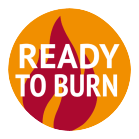 Source: www.readytoburn.org
What are the benefits of Smoke Control Areas?
The main benefit of Smoke Control Areas is the improvement in air quality. Smoke from domestic and industrial chimneys is a major contributor to air pollution, which can lead to respiratory problems and other health issues. By restricting the emission of smoke in designated areas, Smoke Control Areas help to reduce the harmful effects of air pollution.
In addition, Smoke Control Areas also help to reduce the amount of particulate matter in the air. Particulate matter is a type of air pollutant that can have negative effects on human health. By restricting the emission of smoke, Smoke Control Areas help to reduce the amount of particulate matter in the air, which can help to improve air quality and protect public health.
What is Ready To Burn Certification?
The Department for Environment, Food and Rural Affairs (DEFRA) has appointed HETAS and Woodsure to run the Ready to Burn fuel certification scheme that helps people find the cleanest fuels for home burning. By using approved fuels labelled as Ready to Burn, people can easily comply with the 2020 Air Quality Regulations that ban the sale of highly polluting wet wood and house coal.
What are the benefits of Ready to burn?
- Firewood labelled as Ready to Burn has a moisture content of 20% or less
- Ready to Burn logs and briquettes burn more efficiently than unseasoned, green wood
- Using Ready to Burn wood reduces environmental impact
- Ready to Burn wood is better for your appliance and chimney
- Using Ready to Burn wood reduces maintenance and fuel costs
Who enforces Smoke Control Areas?
Regulations are set by DEFRA, but Smoke Control Areas are enforced by local councils. If you are found to be in violation of the regulations, you can be fined. If your chimney emits too much smoke you can be fined anywhere from £175 up to £300; and if you are found to be burning unauthorised fuels in a smoke controlled area, you can be fined up to £1,000.
It is important to check whether you are living in a Smoke Control Area before lighting any fires, as ignorance of the regulations is not a defence.
How do I know if I live in a Smoke Control Area?
You can check whether you live in a Smoke Control Area by contacting your local council. They will be able to provide you with information on the regulations in your area and whether you are allowed to light fires.
Check which areas are Smoke Controlled Areas using this map, but be sure to check with your local council to answer any questions, and confirm if your area is smoke controlled.
In conclusion, Smoke Control Areas are an important measure to improve air quality in the United Kingdom by restricting the emission of smoke from chimneys. If you live in such an area, it's important to follow the rules and only burn approved fuels to avoid hefty fines.
When enjoying outdoor log burners, barbecues, or lighting bonfires, it's crucial to be considerate towards your neighbours and take care not to cause a smoke nuisance. By using dried, seasoned wood and approved fuels with a Ready to Burn certification, you can not only reduce environmental impact but also minimise maintenance and fuel costs.
At Fire Maestro, we believe fires should be enjoyed smoke free, and our range of smokeless fire pits do just that by burning hotter and cleaner.
So, let's all do our part to ensure clean air for everyone.


